My Checklist for Syncing Notion Articles Into Webflow CMS
I used to think the hard part of a Notion-to-Webflow setup was the sync button. It is not. The hard part is deciding what belongs in the database, what stays editorial, and how to keep the CMS from turning into a junk drawer. That is why I treat SyncFlow as a workflow decision, not just an app. It syncs Notion articles directly into Webflow CMS, which means the main risk is usually self-inflicted: bad field modeling, too many presentation-only values, and no cleanup rule.

1. Start With The Content Model
I never start by asking what the app can move. I start by asking what the article actually needs to become once it lands in Webflow. A clean sync is usually simple:
- One Notion database row becomes one Webflow CMS item.
- Fields that affect the written content stay in Notion.
- Fields that only affect layout or presentation are handled carefully.
- If I have to explain a rule twice, it probably belongs in the schema.
That is the same tradeoff I wrote about in How I Decide What Should Sync From Notion Into Webflow, because the content model is what determines whether the sync stays clean or turns into a maintenance task.
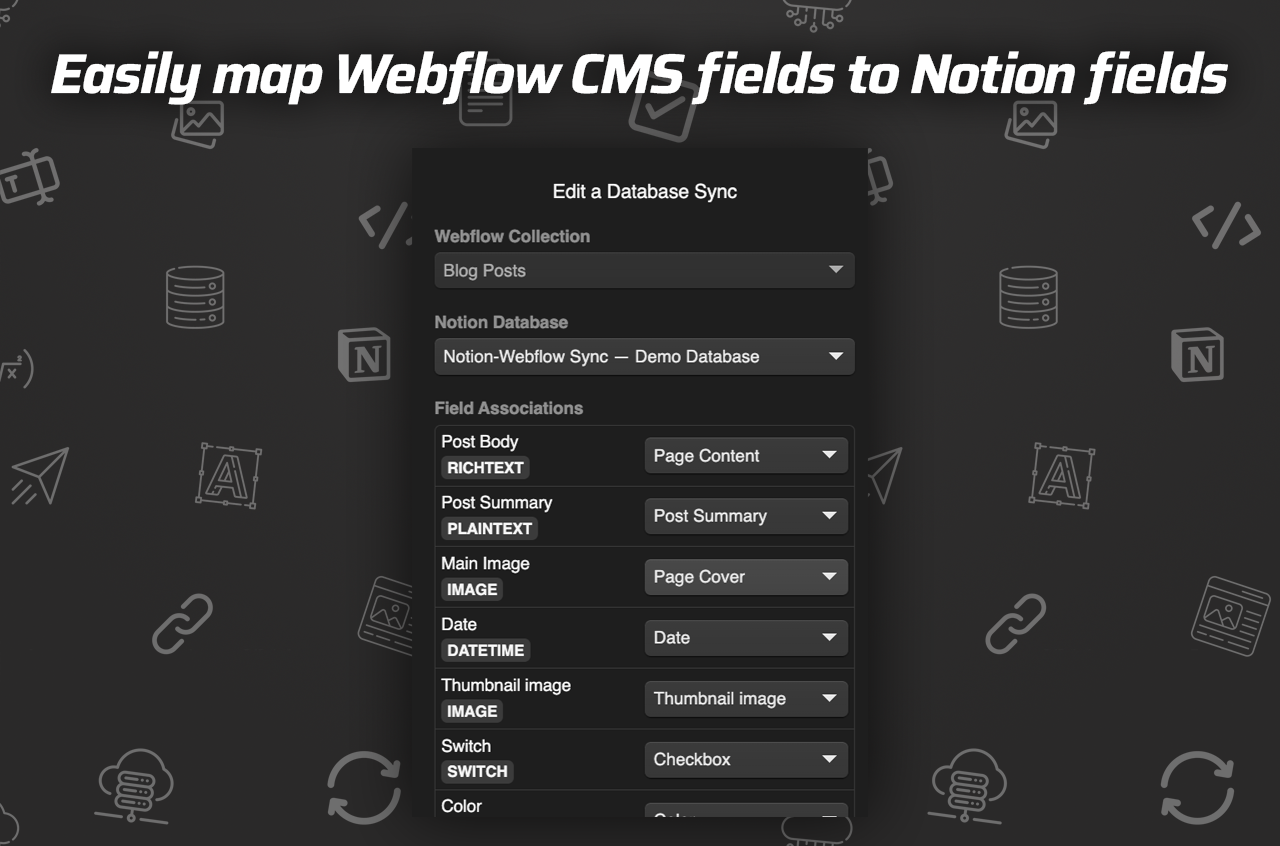
The screen I care about most is the field mapping step. I want it to look boring. Boring usually means I picked the right fields.
2. Map The Fields That Actually Matter
For a blog post, I usually start with a small set of fields:
- Title
- Slug or URL path
- Summary or meta description
- Cover image
- Publish date
- Body content
- Any structured field I know Webflow will render consistently
SyncFlow supports text, images, checkboxes, dates, URLs, code highlighting, and TeX support, which is enough for most editorial work I care about. That matters when I am publishing posts that include technical snippets or structured content, because I do not want to flatten everything into plain text just to move it.
I learned that the hard way, and I wrote about it in What I Learned Trying to Keep Webflow Synced From Notion. Once a field starts carrying presentation baggage, the sync gets harder to reason about.

3. Keep Styling Rules Separate From Content
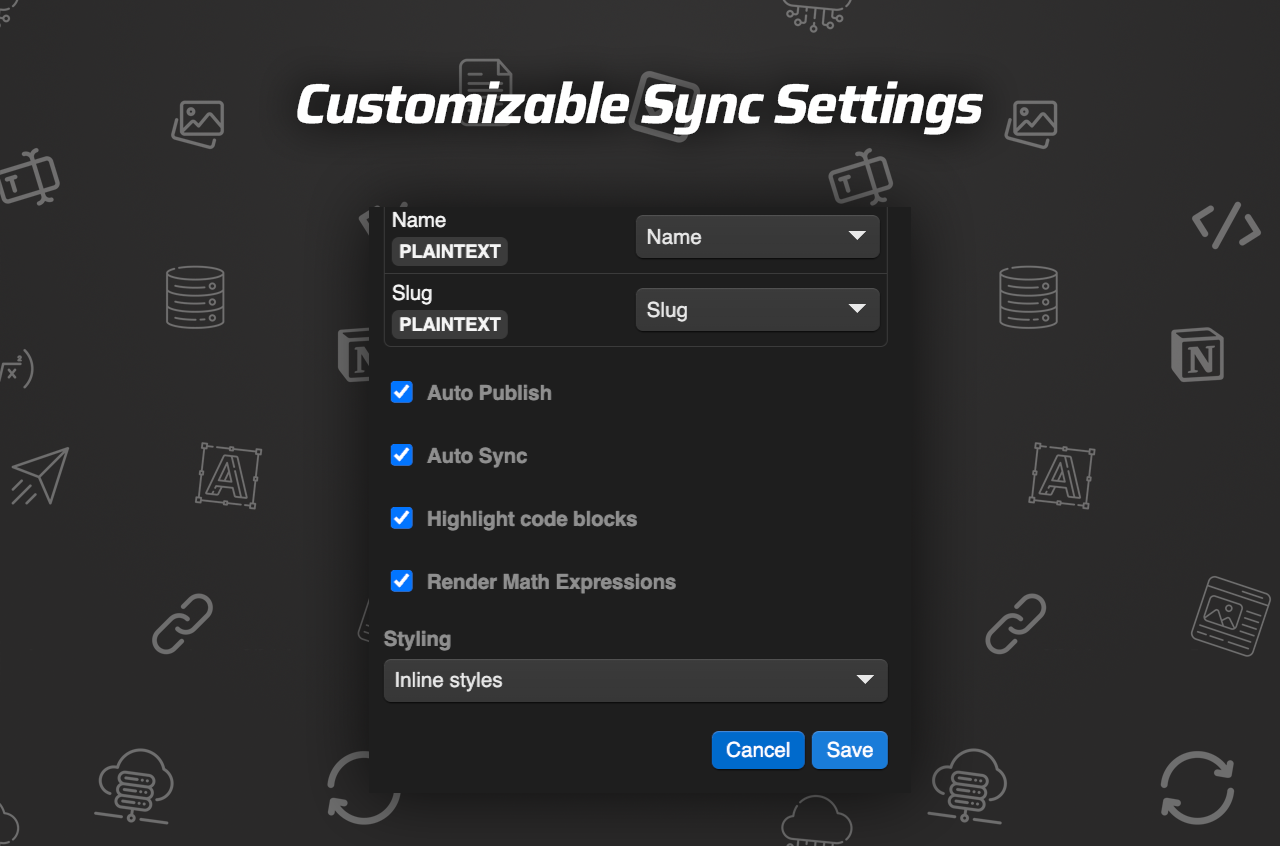
This is where a lot of sync setups get messy. SyncFlow lets me choose between inline styles and classes, and that choice matters more than it looks like it should.
If the Webflow design is still changing, I keep the sync conservative and avoid clever styling behavior. If the layout is stable, classes age better because the content import stays cleaner over time. That is the version of the workflow I would want if I were maintaining the site a year from now.
That is also why I point people to How to Sync Notion Pages to Webflow CMS Without Manual Cleanup. The issue is not whether content moves. The issue is whether it arrives in a state I can trust.
4. Turn On Auto-Sync After The First Boring Pass
I do not turn on auto-sync first. I do one clean manual pass, verify the result in Webflow, and then decide whether automation should keep the two systems aligned.
The sequence I want looks like this:
- Install the app and connect both accounts.
- Map one Webflow collection to one Notion database.
- Sync one post with an image, a date, and a couple of structured fields.
- Check the Webflow CMS item and the published rendering.
- Run a full resync only if I am migrating an existing database and the whole collection needs to match.
- Enable auto-sync once the first post is stable.
The full tutorial is the practical walkthrough, and the trailer is the quick look if you just want the shape of the workflow.
5. When I Think SyncFlow Is Worth It
I like SyncFlow when the team already writes in Notion and Webflow is the publishing layer. It is a better fit when the article structure matters more than the exact editor UI, and when I want linked content, code blocks, or math to survive the trip without hand formatting.
At $8/month for the Standard plan, I do not treat it as a feature checklist. I treat it as a decision about whether I want copy-paste to keep being part of publishing. If a tool removes one fragile manual step, that is usually enough for me.
If you are still deciding whether a site should be synced or exported, I would compare that workflow with How I Decide When a Webflow Site Should Be Exported. I use that question when the CMS itself is the wrong long-term place for the content.
My rule is simple: sync the content, not the clutter. Start with one collection, one test post, and one cleanup pass. If that is clean, turn on auto-sync and let the system do the repetitive part.
Start with SyncFlow and map the most stable collection you publish today.