I Use This Shopify Fit-Family Audit Before Reusing a Size Chart
I learned the hard way that a shared size chart is only helpful when the products truly share a fit logic. A chart that works for a relaxed cotton tee can quietly become a return-generator when it gets attached to a fitted shirt, a lined jacket, or a high-rise trouser. The product page still looks organized. The shopper is the one left guessing.
Before I reuse a chart for a new Shopify product family, I run a short fit-family audit. It takes less time than untangling product descriptions later, and it keeps the guidance specific enough for someone deciding whether to buy.
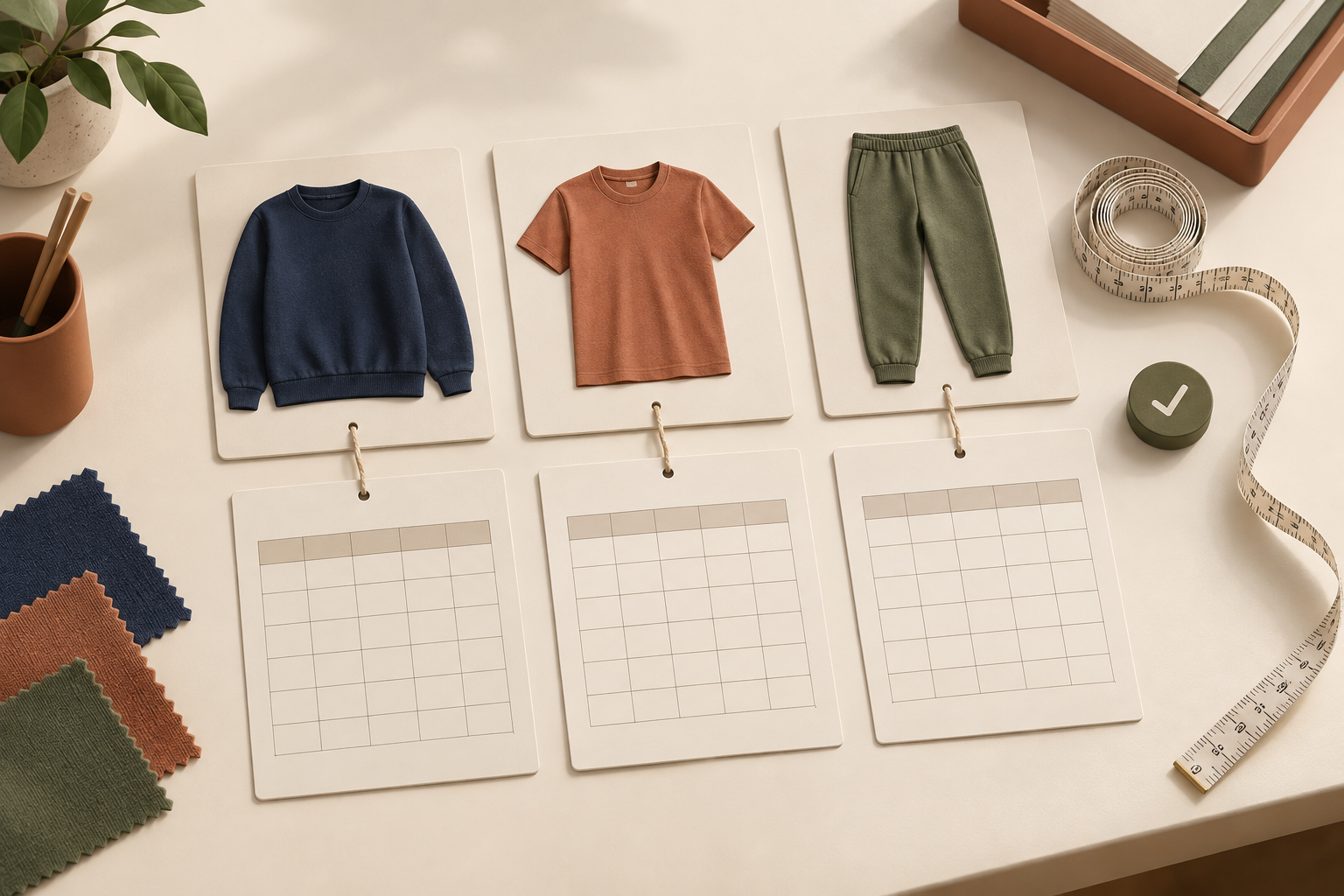
Start With Fit Logic, Not Product Labels
I do not start by asking whether two products are both "tops" or both "bottoms." Those are merchandising labels. I start with the decisions a shopper has to make.
Two products can usually share a chart when they have the same:
- intended fit: relaxed, regular, slim, or oversized
- measurement method: garment-flat measurements or body measurements
- meaningful points of measure: for example chest, body length, and sleeve length
- size scale and grading logic
- amount of stretch or ease
A heavyweight relaxed tee and a lightweight relaxed tee may fit under one chart if those answers stay stable. A cropped, fitted rib top probably does not, even if it uses the same S–XL labels. The shopper needs different expectations about ease, length, and stretch.
That distinction is why I prefer the product-family approach over attaching a chart one page at a time. I covered the operational side of that in How to Assign One Shopify Size Chart to a Whole Collection: assign a chart to the family only after the family has earned it.
My Five-Question Fit-Family Audit
For every new style, I put its sample beside the chart it might inherit and answer these five questions. If I get a meaningful "no" on any of them, I make a separate chart or at least a separate measurement note.
1. Does the same measurement method make sense?
A garment chart needs a consistent method. If chest width is measured flat, say so and keep that convention across the family. If a product needs body measurements instead—think a close-fitting bodysuit or compression item—it is not a clean sibling of the flat-garment chart.
2. Would I describe the fit with the same sentence?
Write the shopper-facing sentence, not an internal category name. "Designed for a relaxed fit; choose your usual size" does not belong beside a tailored overshirt that is meant to sit close through the shoulders. If the sentence changes, the guide probably should too.
3. Are the points of measure actually comparable?
A basic tee might need chest width and length. Trousers need waist, rise, inseam, and often hip. Footwear needs an entirely different structure. Trying to make one mega-chart cover all of them gives shoppers a larger grid but less useful information.
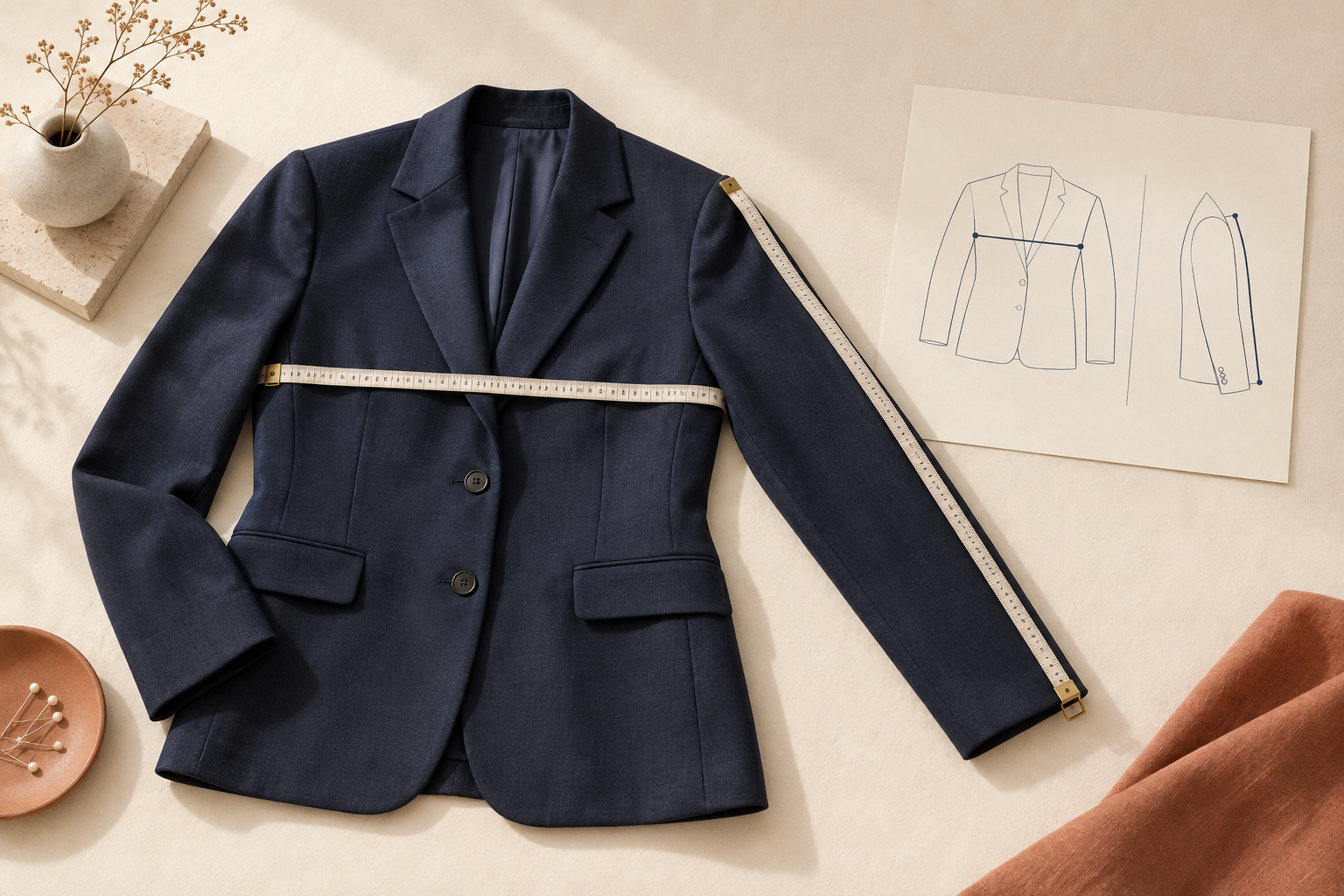
4. Is stretch or construction changing the buying decision?
This is the check that catches most false reuse. A woven shirt, a rib-knit top, and a garment with a firm lining can share a nominal size range while producing very different sizing decisions. Note the stretch where it matters, and split the chart when the fabric changes the recommendation.
5. Would a customer who owns product A understand product B from this guide?
This final question is deliberately simple. If the honest answer is "not quite," do not hide the difference behind one generic chart. A separate guide is cheaper than a confused purchase and a support thread.
Build the Smaller System First
I used to think fewer charts always meant less maintenance. In practice, the lowest-maintenance system is the smallest set of charts that stays truthful. For a small apparel store, that might be:
- one chart for relaxed tees and sweatshirts
- one chart for fitted knit tops
- one chart for tailored shirts and jackets
- one chart for each trouser fit family
That is still far better than pasting tables into every description. With Supra Size Chart, I can keep charts in one place, add a reusable measurement guide, and apply them with Shopify rules by collection, product type, vendor, tag, or individual product. The chart data stays in Shopify metaobjects and can be exported as CSV or JSON, so the system is not trapped inside a product description or a third-party format.
The display choice should follow the same principle. An inline table works when the chart is short and essential; an accordion is useful when the page needs breathing room; a modal can work for a more detailed guide. The important part is that the guidance is easy to find before a shopper adds to cart—not that every product page looks identical.
Make the Rule Match the Audit
Once I have a clean family, I turn the audit into an assignment rule. A collection rule is usually right for a deliberately curated fit family. A product-type or tag rule can be better when the same family spans several collections. Individual product rules are the exception for special constructions, limited runs, or a style that fails one audit question.
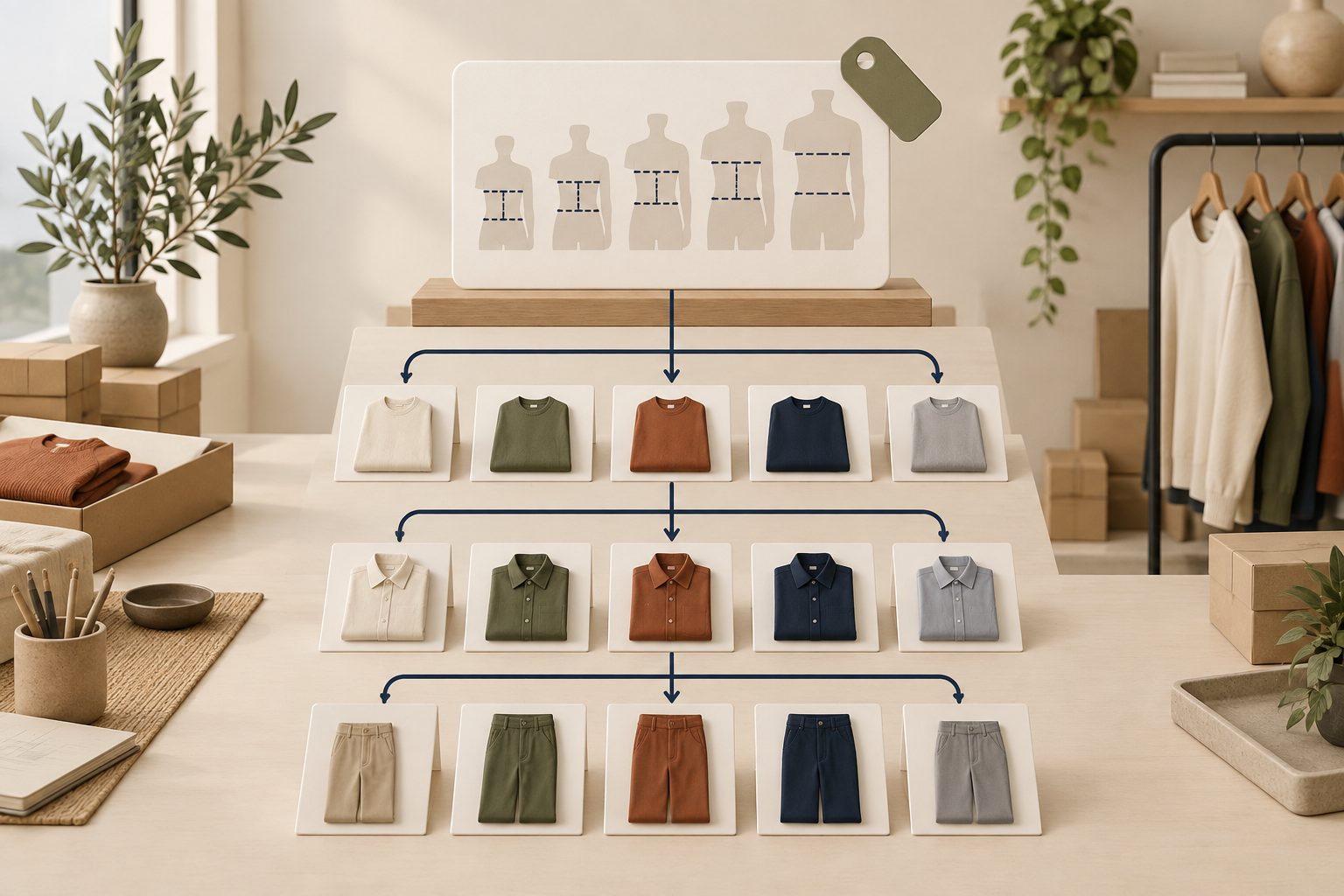
This is also where a system prevents small catalog changes from breaking the experience. When a new product is added to the matching collection or tag, the rule can cover it automatically—but only after you have checked that it belongs. For the broader pre-drop controls, pair this audit with The Apparel Size Guide Launch Checklist I Use Before a Shopify Drop and My Shopify Size-Chart Release Gate: Four Checks Before a New Drop.
The One Test I Run on the Product Page
Before publishing a new rule, I open one representative product page on desktop and mobile and ask: can a first-time shopper tell what to measure, which unit they are reading, and what fit outcome to expect? If the answer is not immediate, I add a measurement guide, clarify the note, or choose a display mode that makes the information easier to scan.
You do not need a different size chart for every SKU. You do need each shared chart to make an honest promise about the products it covers. Run the five questions before you reuse a guide, then set up Supra Size Chart to keep the approved charts, measurement guides, and assignment rules in one Shopify-native system.