How To Sync Notion Pages With Webflow CMS Without Manual Copying
If you’re tired of copying and pasting content from your notes into your site, there’s a faster, cleaner way. You can sync Notion pages directly to your Webflow CMS—automatically—so your blog, docs, and landing pages stay perfectly up to date without manual work.
In this guide, you’ll learn how to connect your content pipeline end-to-end using SyncFlow, a purpose-built Notion–Webflow sync tool that handles field mapping, auto-publish, code highlighting, math rendering, and more.
Why this matters: Auto-syncing Notion pages to Webflow CMS eliminates content debt, reduces errors, and lets teams ship updates in minutes, not hours.
What is SyncFlow (and why it’s different)
SyncFlow is a focused integration that bridges your Notion databases and Webflow CMS collections with a few clicks. It’s built for content teams, marketers, and technical writers who want to write in Notion and publish beautifully in Webflow—without rebuilding layouts or reformatting every block.
SyncFlow is a focused integration that bridges your Notion databases and Webflow CMS collections with a few clicks. It’s built for content teams, marketers, and technical writers who want to write in Notion and publish beautifully in Webflow—without rebuilding layouts or reformatting every block.
Key capabilities you’ll actually use:
- Auto-Sync and Auto-Publish: New or updated pages in Notion appear in your Webflow CMS automatically.
- Versatile Field Types: Text, images, URLs, checkboxes, dates—plus robust support for code blocks and TeX.
- Page Linking: Links between pages in your notes become internal links between CMS items.
- Customizable Styling: Import with inline styles or use classes for full design control in Webflow.
- Full Resync: Reconcile an entire collection in one shot when you need a clean slate.
Explore SyncFlow and get started: https://syncflow.ybouane.com/

How to Sync Notion Pages with Webflow CMS (No Manual Copying)
Follow these steps to set up a reliable, automated Notion-to-Webflow content pipeline.
Follow these steps to set up a reliable, automated Notion-to-Webflow content pipeline.
- Visit SyncFlow and click Get Started
- Go to https://syncflow.ybouane.com/ and select “Get Started”. Create an account or log in.
- Grant access to Webflow
- Approve SyncFlow so it can interact with your site’s CMS.
- Launch SyncFlow inside Webflow
- Open the Webflow Designer and launch the SyncFlow app.
- Connect your Notion workspace
- In the SyncFlow app, click “Connect Notion” and choose the page or folder that contains your database.
- Create a new sync task
- Click “Sync a new database”.
- Select your Webflow CMS Collection
- Pick the collection (e.g., Blog Posts, Case Studies) that should receive synced content.
- Choose or create a Notion database
- Select an existing database or let SyncFlow create one with the right fields.
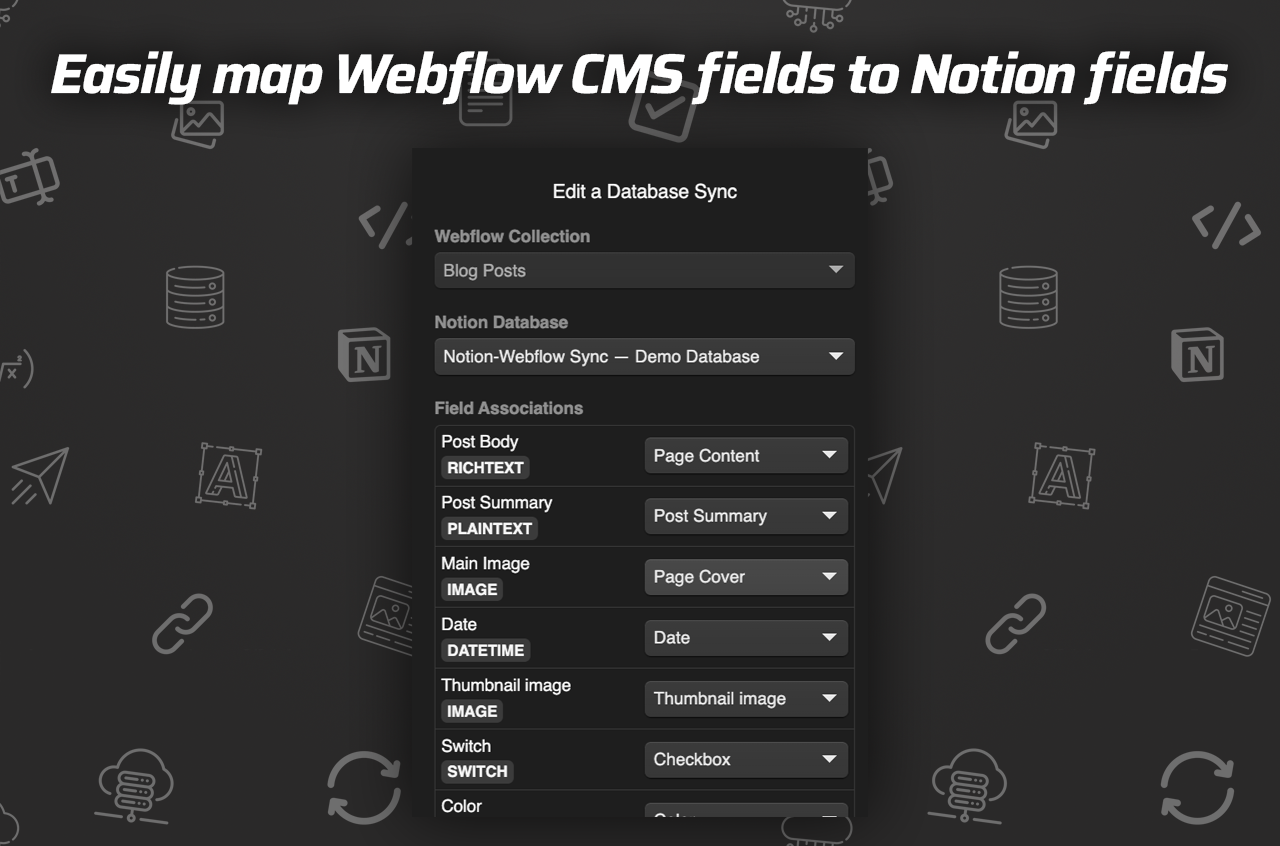
- Map fields (the magic step)
- Connect each Notion property to the correct Webflow field: Title, Slug, Summary, Rich Text, Cover Image, Tags, Dates, and more.
- Configure sync settings
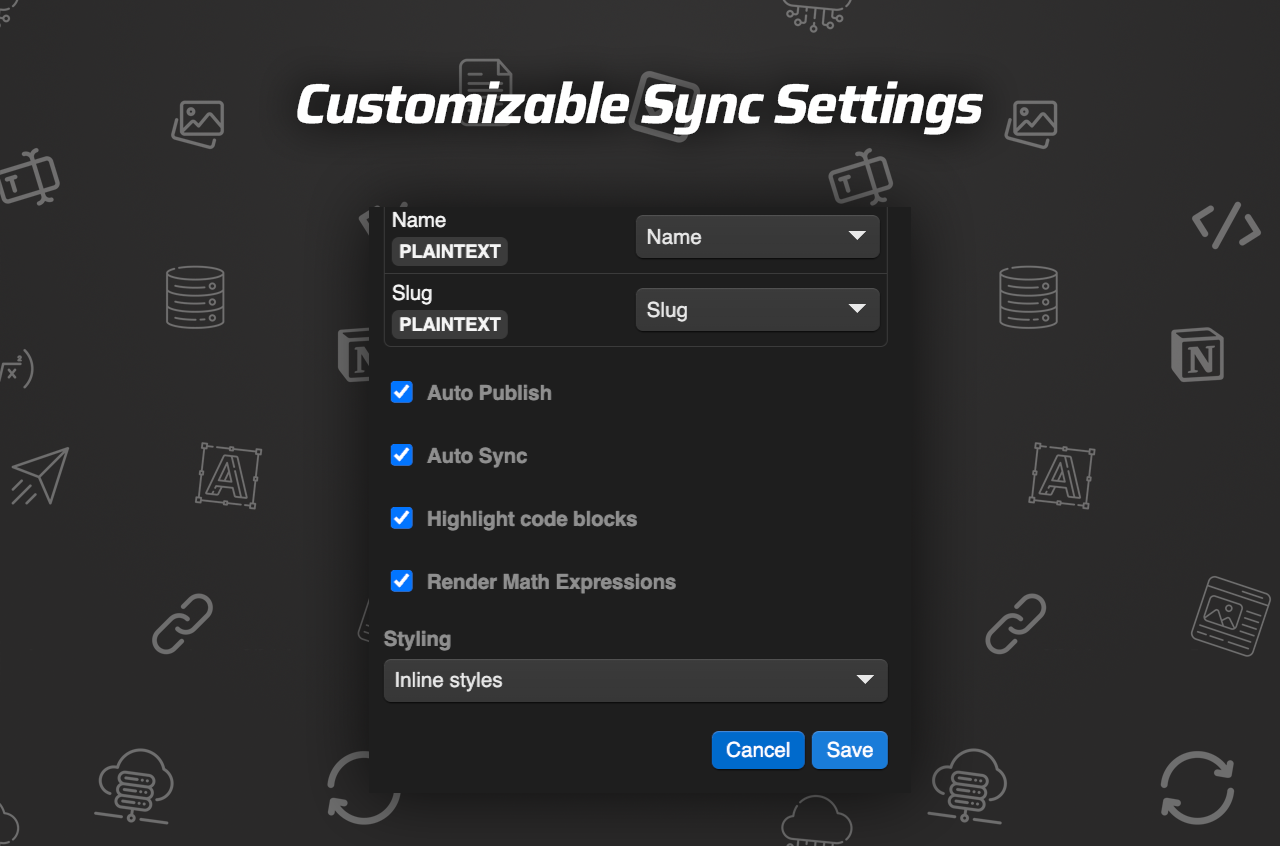
- Toggle Auto-Sync and Auto-Publish so updates go live automatically.
- Enable code highlighting and TeX support if you publish technical or academic content.
- Choose “Inline Styles” for quick results or “Use Classes” to style everything in Webflow.
- Save settings and verify
- Save your configuration, add a test entry in Notion, then confirm it appears in your Webflow CMS.
- Check your Webflow CMS
- Within minutes, you’ll see the synced content populate your collection.
- Optional: Full Resync
- Use Full Resync to align an existing Webflow collection with your Notion database in one pass.
Pro Tips for a Flawless Notion → Webflow Pipeline
- Establish a source of truth: Treat your Notion database as the single source for content—draft, review, and approve there.
- Name fields clearly: Align Notion properties with your Webflow CMS fields (e.g., Title, Slug, Summary, Body, Cover, Tags).
- Use classes for brand control: If you care about pixel-perfect typography and spacing, choose “Use Classes” and style in Webflow.
- Benefit from code highlighting: Technical blogs and docs become instantly more readable with formatted code blocks.
- Render math cleanly: If you publish formulas, enable TeX to render expressions properly.
- Internal links that actually work: Page links from your notes can become internal post links, improving SEO and UX.
- Schedule content with dates: Use date fields to coordinate launches, and Auto-Publish to go live right away after updates.
When to Use SyncFlow (and When You’ll Love It)
- Editorial teams: Draft in Notion, publish to Webflow CMS, and stop chasing formatting fixes.
- Marketing workflows: Ship announcements, changelogs, and landing-page content without copy-paste chaos.
- Engineering & product docs: Sync code blocks and technical notes with syntax highlighting.
- Education & research: Publish math-heavy posts with clean TeX rendering.
- Multi-author blogs: Give contributors a simple Notion database to write in; your site stays consistent.
Why This Improves SEO and Content Velocity
- Faster updates = fresher content: Search engines reward regularly updated sites. Auto-sync makes this effortless.
- Fewer formatting errors: Clean, consistent structure improves readability, dwell time, and crawl clarity.
- Better internal linking: Page-link mirroring helps organize content clusters and topical authority.
- Publishing at scale: As your library grows, your pipeline doesn’t slow down.
Pricing That Removes the Friction
- Standard Plan: $8/month
- Includes 1 Webflow site install, Unlimited Syncs, Unlimited Databases, Unlimited Connected Fields
- Start here: https://syncflow.ybouane.com/
Watch the Product in Action
- Full Tutorial: https://www.youtube.com/watch?v=_890vYoe3KQ
- Trailer: https://www.youtube.com/watch?v=HGjBCLL3anc
Frequently Asked Questions
- Does this replace my Webflow design? No. You still design in Webflow. SyncFlow brings in structured content and preserves your design system.
- Can I push updates automatically? Yes—enable Auto-Sync and Auto-Publish.
- What about advanced content (code, math)? Enable code highlighting and TeX in settings to render both beautifully.
- Can I change how content looks? Yes. Import with classes and style in Webflow for full control.
Get Started in Minutes
Stop copying and pasting—and start publishing with a real content pipeline. Connect your notes to your site, and keep everything in sync automatically.
Stop copying and pasting—and start publishing with a real content pipeline. Connect your notes to your site, and keep everything in sync automatically.
Try SyncFlow now: https://syncflow.ybouane.com/ — write in Notion, design in Webflow, and ship content faster than ever.