How To Sync Notion Pages To Webflow CMS Without Breaking Formatting
If you have ever copied content from your notes into your website only to see headings misalign, code blocks lose color, or math equations break, you know the pain. The fastest, most reliable way to sync Notion pages to your Webflow CMS without breaking formatting is to use a purpose-built connector that preserves structure, styles, and media.
Enter SyncFlow — a simple, powerful way to sync Notion to Webflow CMS with auto-sync, code highlighting, TeX support, and granular field mapping. Start here: Get started with SyncFlow
Quick videos to follow along:
- Full tutorial: https://www.youtube.com/watch?v=_890vYoe3KQ
- Trailer: https://www.youtube.com/watch?v=HGjBCLL3anc
Why formatting breaks when you copy-paste
Manual copy-paste fails because:
- Different rich text models: Headings, lists, and callouts do not map 1:1.
- Code blocks lose language context and highlighting.
- Math expressions are not rendered natively.
- Embedded images, page links, and galleries break or become plain text.
- CMS fields like slugs, authors, and tags are not consistently populated.
A Notion-to-Webflow sync that understands both sides fixes this by translating blocks into native CMS fields and rendering rules.
The reliable path: Sync Notion with Webflow CMS using SyncFlow
SyncFlow connects your Notion databases to your Webflow CMS collections and keeps them in sync automatically. Highlights:
- Auto-sync and auto-publish to keep your site fresh in real time.
- Precise field mapping for titles, rich text, images, dates, checkboxes, URLs, and more.
- Code highlighting that preserves language and styling.
- TeX support for math-heavy content.
- Page linking that converts internal references into CMS links.
- Flexible presentation: import inline styles or use classes for full Webflow design control.
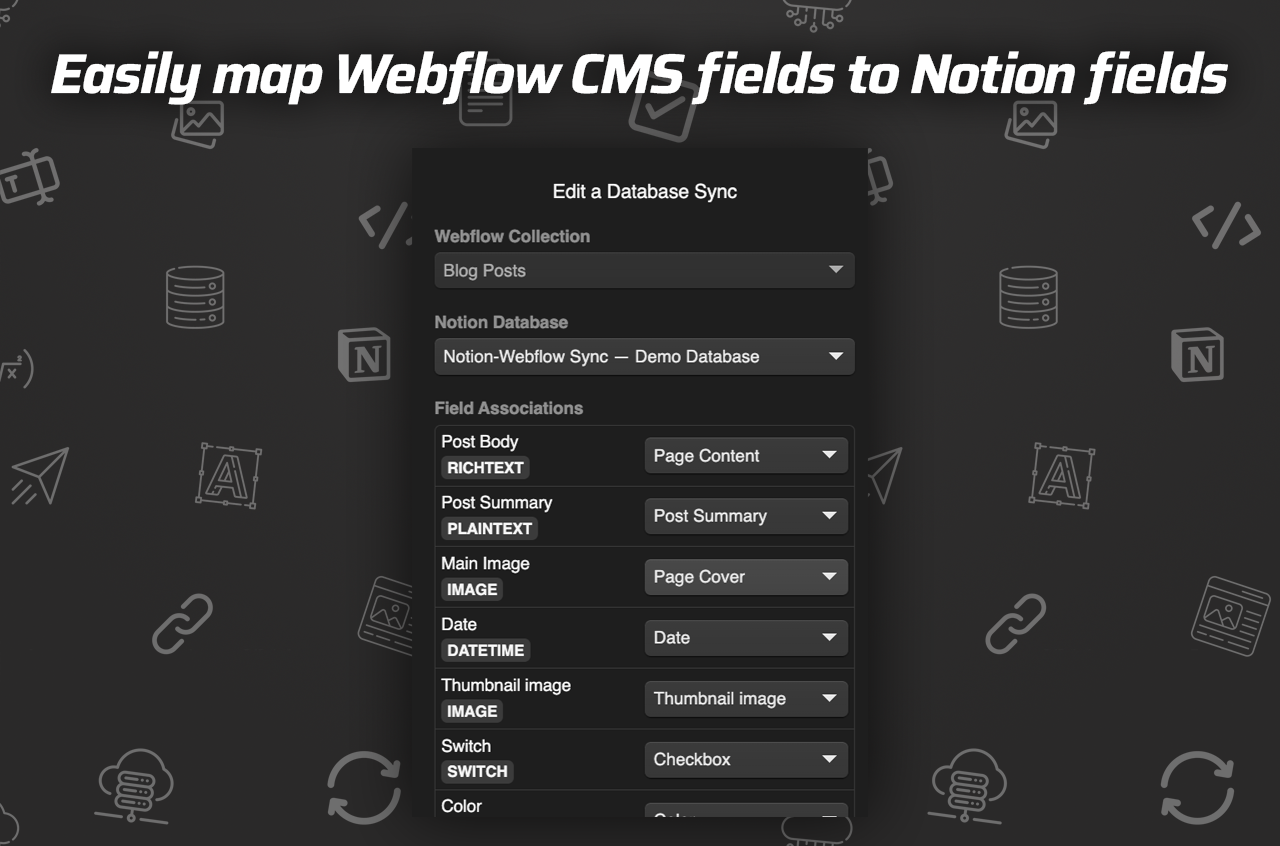
Step-by-step: Sync Notion pages to Webflow CMS without breaking formatting
Follow these steps to set up a clean, resilient pipeline from Notion to your Webflow blog, docs, or knowledge base.
- Install and connect
- Visit the SyncFlow site: https://syncflow.ybouane.com/ and click Get Started.
- Grant access to your Webflow workspace.
- In Webflow Designer, open the SyncFlow app.
- Click Connect Notion and choose the workspace page or folder you want to sync.
- Create your sync task
- In SyncFlow, select Sync a new database.
- Choose the target Webflow CMS Collection (for example, Blog Posts).
- Pick an existing Notion database or let SyncFlow create one for you. If new, it will auto-generate the fields.
- Map fields for perfect parity
- Map Title, Slug, Main Content, Summary, Cover Image, Tags, Author, Date, and any custom fields.
- Align multi-reference fields like tags or categories to the appropriate Webflow fields.
- Confirm image handling for covers and inline images.
- Choose styling behavior
- Inline styles: Best for quick launches. Notion headings, lists, callouts, and quotes ship with embedded styling.
- Use classes: Best for brand consistency. SyncFlow applies semantic classes so you can style every block in Webflow without touching the content.
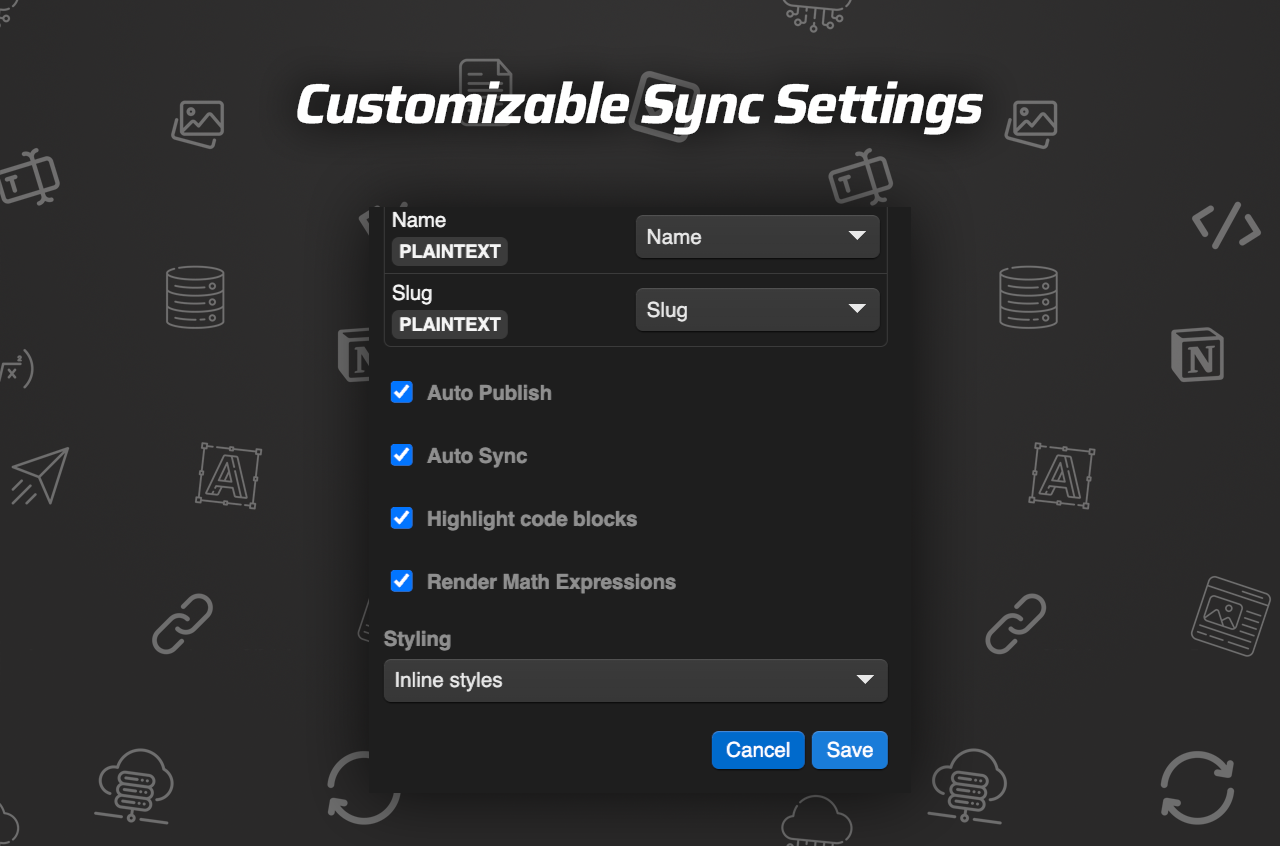
- Turn on formatting keepers
- Enable Code Highlighting to preserve code blocks with language-aware styling.
- Enable TeX support to render equations cleanly.
- Toggle Auto-Publish if you want changes to go live automatically after sync.
- Switch on Auto-Sync so updates in Notion propagate to Webflow in near real time.
- Verify the first sync
- Add a new entry in Notion with headings, lists, images, code, and math.
- Check the sync status in SyncFlow.
- Open your Webflow CMS Collection and confirm that the content, images, and fields look correct.
- Optional: Full resync
- If you are connecting an existing CMS, run a full resync to reconcile every item with your Notion database.

Pro tips to keep formatting flawless
- Use consistent heading hierarchy in Notion (H1 for title, H2-H3 for sections) so your Webflow styles cascade predictably.
- For code blocks, set the language in Notion to enable accurate highlighting in Webflow.
- For math, wrap expressions with the standard TeX delimiters so they render sharply.
- Add alt text in Notion for each image; SyncFlow carries it over so you remain accessible and SEO-friendly.
- Create slugs explicitly for canonical URLs, or map a slug field that SyncFlow will populate.
- Leverage page linking in Notion to interlink related posts; SyncFlow converts these into Webflow post-to-post links.
- Use the classes option to centralize typography and spacing in Webflow’s Style Guide.
SEO checklist for Notion to Webflow CMS
- Craft an SEO Title and Meta Description field in your Notion database and map both to Webflow.
- Include a Summary or Excerpt for collection lists and SERP snippets.
- Use descriptive image filenames and alt text to boost image search performance.
- Keep a Tags or Topics multi-reference field to organize content clusters and internal linking.
- Turn on Auto-Publish for speed, but keep drafts in Notion when you need editorial reviews.
Pricing and getting started
The Standard plan is just 8$/month and includes 1 Webflow site install, unlimited syncs, unlimited databases, and unlimited connected fields. You can be live in minutes:
- Visit: SyncFlow — Notion to Webflow Sync
- Click Get Started and follow the guided setup.
Prefer video?
- Watch the full tutorial: https://www.youtube.com/watch?v=_890vYoe3KQ
- See the quick trailer: https://www.youtube.com/watch?v=HGjBCLL3anc
Frequently asked questions
- Will sync overwrite my manual edits in Webflow? If you edit a synced field in Webflow, SyncFlow will align it with Notion on the next sync. Keep source-of-truth editing in Notion for synced fields, and use unsynced fields for Webflow-only tweaks.
- Can I connect multiple Notion databases? Yes. You can create multiple sync tasks and map each database to its own Webflow collection.
- Does it support complex content like code and math? Yes. Turn on Code Highlighting and TeX support to preserve formatting and rendering.
- Can I keep full control over design? Yes. Choose the classes option to style everything in Webflow while SyncFlow delivers clean, structured content.
Final takeaway
Manually copying content is fragile. A dedicated Notion to Webflow CMS pipeline preserves structure, styling, and relationships so you publish faster and with confidence. Use SyncFlow to set up auto-sync, keep code and math pristine, and protect your brand’s design system at scale.