How To Publish Notion Pages To Webflow CMS Automatically
If your team drafts content in Notion but publishes on Webflow, you’ve probably wrestled with copy-paste, messy formatting, and missed go-live dates. Here’s the good news: you can auto-publish Notion pages straight into your Webflow CMS—without manual work—using SyncFlow.
SyncFlow connects your Notion databases to Webflow CMS collections so new or updated pages are synced and published automatically. In this guide, you’ll learn the exact steps to set up auto-publish, map fields correctly, and keep your blog humming with fresh, SEO-ready content.
- Try it now: https://syncflow.ybouane.com/

TL;DR — Automatic Publishing From Notion to Webflow
Ready to ship in minutes:
- Install SyncFlow and connect accounts
- Map your Notion database fields to Webflow CMS
- Enable Auto-Sync + Auto-Publish
- Run your first sync and verify
Get started: https://syncflow.ybouane.com/
Why Automate Publishing From Notion to Webflow?
- Eliminate manual copy-paste and formatting drift
- Keep your site fresh with Auto-Publish on edits and new posts
- Maintain consistent styles with class-based rendering
- Preserve technical formatting with code highlighting and TeX support
- Scale your editorial workflow with reliable, real-time updates
What Actually Gets Auto-Published?
With SyncFlow’s Auto-Sync and Auto-Publish enabled:
- New pages created in your Notion database are automatically pushed into the selected Webflow collection and published.
- Edits to existing pages are synced and republished, keeping your live content current.
- Rich content elements—including images, checkboxes, dates, URLs, code blocks, and math—are rendered in Webflow with high fidelity.
Prerequisites
- A Webflow project with at least one CMS Collection (e.g., Blog Posts)
- A Notion database (title, body, etc.) to serve as your content source
- A SyncFlow account: https://syncflow.ybouane.com/
Step-by-Step: How To Auto-Publish Notion Pages to Webflow CMS
Follow these steps to configure SyncFlow for hands-free publishing.
1) Install and Connect
- Visit https://syncflow.ybouane.com/ and click “Get Started.”
- Grant access to your Webflow sites when prompted.
- In Webflow Designer, open the SyncFlow app.
- Click “Connect Notion” in SyncFlow and choose the page or workspace that contains your database.
2) Create a Sync Task and Select Your Collection
- In the SyncFlow app, click “Sync a new database.”
- Choose the target Webflow CMS Collection (e.g., Blog Posts).
- Pick your Notion database. If you don’t have one, SyncFlow can create and set up fields for you.
3) Map Notion Fields to Webflow Fields (Critical for SEO)
Map the properties that matter for ranking and layout:
- Title → Name / Post Title (Webflow Plain Text)
- Slug (Notion text) → Slug (Webflow)
- Summary/Excerpt → Plain Text (use in listing pages and meta description)
- Body (Notion rich text) → Rich Text (Webflow)
- Cover/Image → Image (Webflow)
- Tags/Categories (multi-select) → Plain Text or suitable list field
- Author, Publish Date, Canonical URL, External Links → Appropriate Webflow fields
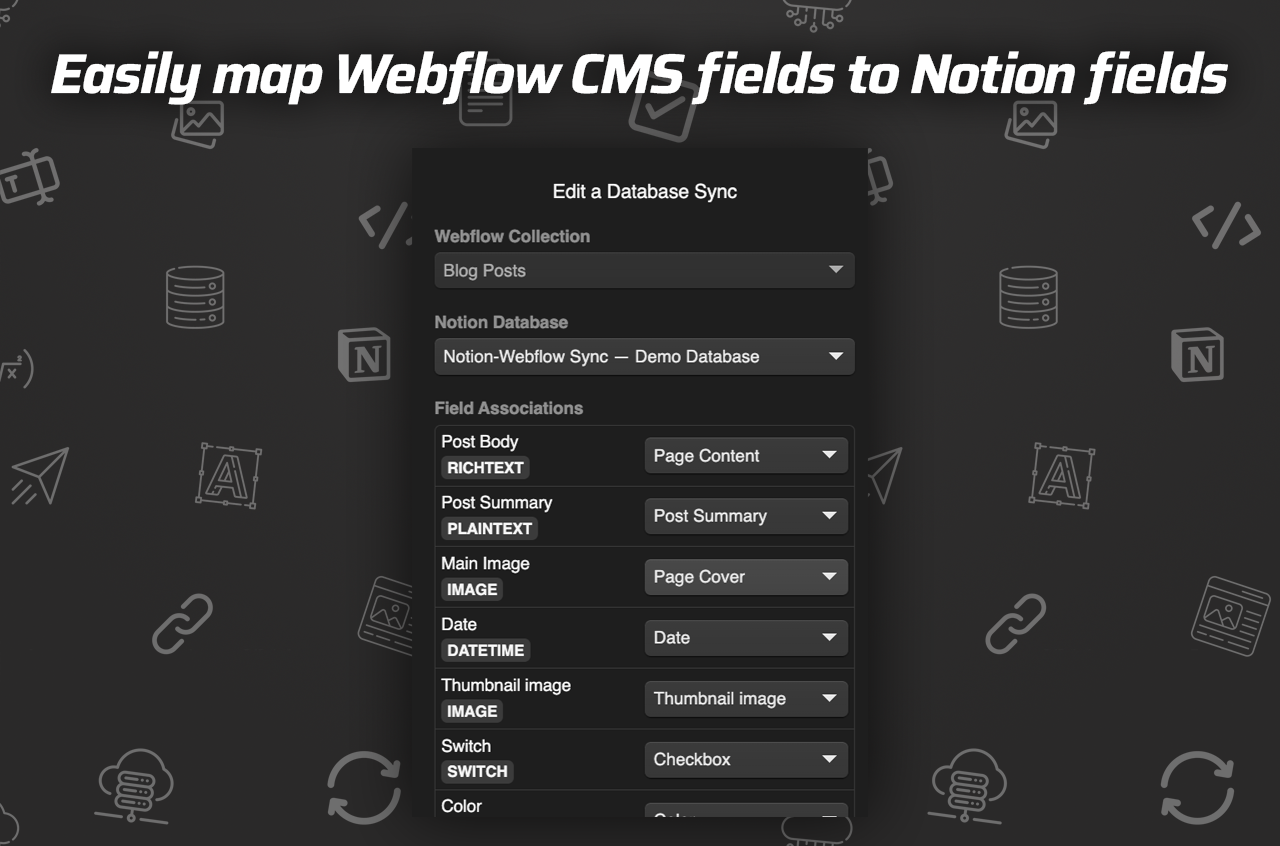
Pro tip: Create a dedicated “SEO” group in your Notion database with fields for Slug, Meta Title, Meta Description, Featured Image, and Canonical URL so editors never forget them.
4) Configure Auto Settings
- Enable Auto-Sync: SyncFlow watches for new/updated pages and pushes them to Webflow.
- Enable Auto-Publish: As soon as content lands in Webflow, it’s published automatically.
- Turn on Code Highlighting if you publish technical posts.
- Turn on TeX Support if you include math expressions.
- Choose Rendering: “Inline styles” for quick wins, or “Use classes” for full Webflow design control.
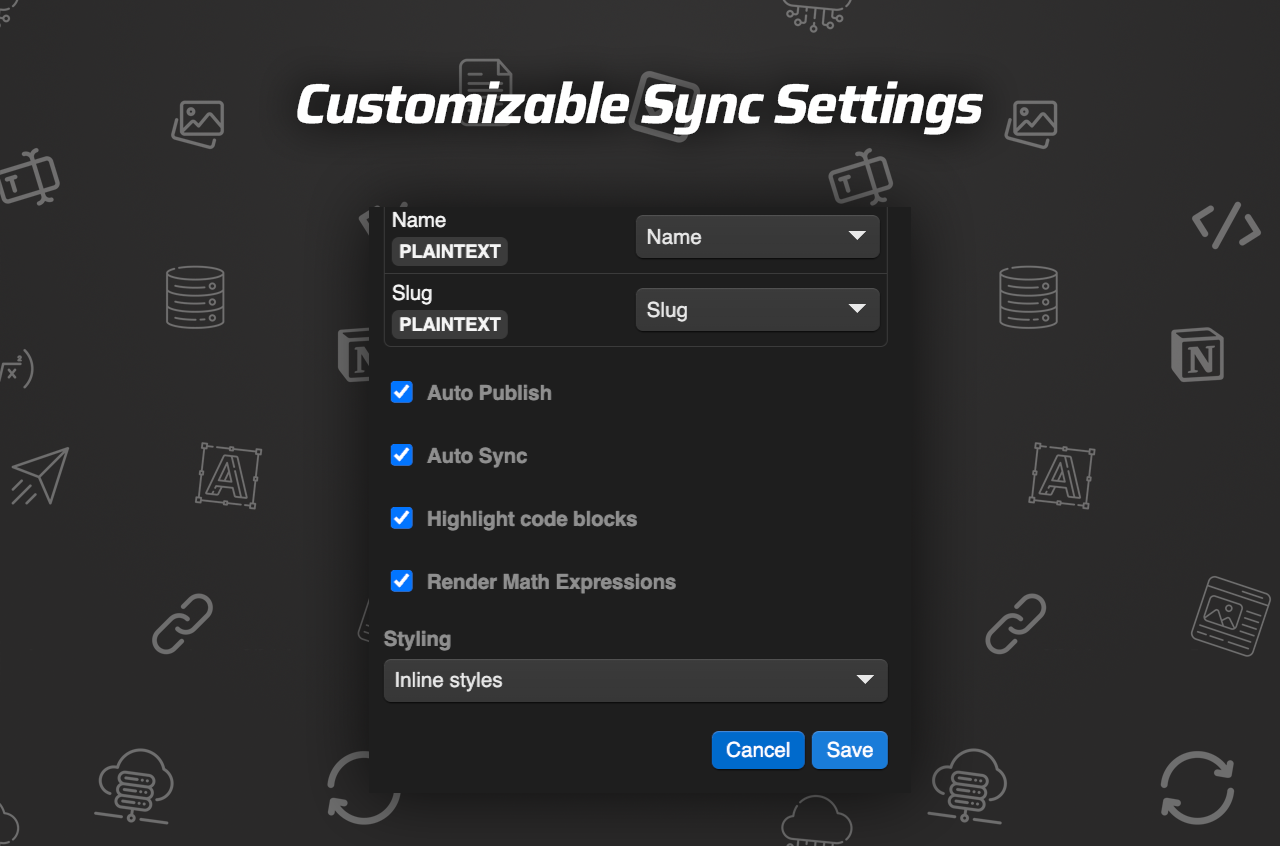
Save your settings.
5) Run Your First Sync and Verify in Webflow CMS
- Click “Sync now” to trigger an initial pass.
- Open your Webflow CMS Collection. You should see entries appear and publish.
- Spot-check a post page and a collection list page to confirm styling and SEO fields.
6) Optional: Full Resync for Existing Content
- For existing databases, use Full Resync to reconcile Webflow with Notion and ensure a perfect match.
Styling Options: Inline vs. Class-Based
- Inline Styles: Fastest path to publish. Ideal for teams that don’t need fine-grained control.
- Use Classes: SyncFlow imports semantic elements and classes so you can style everything in Webflow Designer. Best for brand consistency and scalable design systems.
SEO Best Practices for Auto-Published Posts
- Slugs: Create clean, keyword-rich slugs in Notion (e.g., publish-notion-to-webflow-cms-automatically)
- Meta Title & Description: Maintain dedicated Notion fields; map them to Webflow SEO fields.
- Featured Image: Always include an on-brand featured image and alt text.
- Internal Links: Link related articles in your Notion body; SyncFlow preserves links between pages.
- Structured Content: Use proper headings (H2/H3), bullet lists, and short paragraphs for readability.
Troubleshooting and FAQs
- My post didn’t appear in Webflow: Confirm Auto-Sync is enabled and the correct database/collection is selected. Check that your Notion page is inside the synced database (not a child page elsewhere).
- It appeared but didn’t publish: Ensure Auto-Publish is toggled on in SyncFlow. If you have scheduled publishing in Webflow, confirm there’s no conflict.
- Images aren’t showing: Verify your Notion property is mapped to a Webflow Image field and that the asset is accessible.
- Formatting looks off: Switch to “Use classes” and style in Webflow, or adjust your Notion blocks (avoid nested toggles for complex layouts if you want simpler markup).
- Code and math look plain: Enable Code Highlighting and TeX in SyncFlow settings.
- Sync feels slow: Large assets or many simultaneous updates can add a short delay. Use manual “Sync now” for priority posts; otherwise, let Auto-Sync handle it.
Video Walkthroughs
- Full tutorial: https://www.youtube.com/watch?v=_890vYoe3KQ
- Quick trailer: https://www.youtube.com/watch?v=HGjBCLL3anc
Pricing and Next Steps
The Standard plan is just $8/month for one Webflow site with unlimited syncs, databases, and connected fields. Get started now and move your entire editorial workflow to a streamlined, auto-published system.
- Start here: https://syncflow.ybouane.com/
With SyncFlow, your team writes where it’s comfortable and publishes where it performs—automatically. Set it once, and every new Notion page becomes a fully designed, SEO-ready Webflow post without lifting a finger.